Google can’t answer question about using Google (or NOT)

I don’t see any reason to use Google.

I think it’s super-easy to find information by just using my own literacy skills.

So this past weekend (at WCEU 2025, aka “WordCamp Europe” in Basel) I used the opportunity to ask a Senior Tech Engineer at Google a question about why he thinks I should use Google. His answer was: “I don’t know”. I consider that to be a very weak answer, considering this answer came from the mouth of a Google representative.

Q & A [“Mythbusting and Q&A about appearing in Google Search” https://wordpress.tv/2025/06/07/mythbusting-and-qa-about-appearing-in-google-search @ 22:59]

So I guess he was unable to successfully motivate me to use Google.

I do understand that there are many people on Earth who have less literacy skills than I do. Many people are not sure how to spell words. Or maybe they feel unable to type or articulate words correctly. Therefore, I do realize that some features Google offers (such as “Did you mean…”, related searches, etc.) might be useful for people with more limited literacy skills. Still, for me — if I search for something like “CoViD” and the search engine answers something like “Did you mean ‘conspiracy theory’?” that would actually not help me very much. [1]

Therefore, I think I will simply stick to more reliable search engines.
[1] See also “This is just a load of crap” [ https://podcasts.video.blog/2022/01/08/this-is-just-a-load-of-crap ]

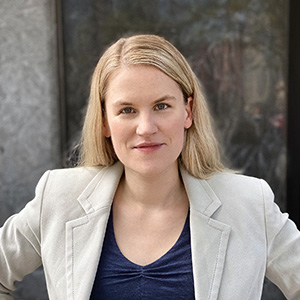
FaceBook Whistleblower Frances Haugen Presents Idea (for Government Regulation) that All Search Engine Algorithms Should Display Search Results in Reverse-Chronological Order

Your Undivided Attention Podcast Episode 42: Facebook Whistleblower Frances Haugen in Conversation (with Tristan Harris & Aza Raskin):

Aza Raskin:

It also means that we’re talking about not just Facebook, but a business model more generally. And as you’re pointing out Tristan, that means it can’t be something that, the solution can’t be applied only to Facebook. It has to be applied to the entire industry at once.

Frances Haugen:

Yeah. I think it’s a thing where we’re going to have to have government oversight and have them step in and say, Hey, section 230 right now gives immunity for content that is supplied by users, right? So it’s like if platforms aren’t the ones creating content, then they’re not responsible for the content that gets created.

But platforms are responsible for the choices they make in designing their algorithms. And I think exempting those algorithm and choices from 230 and forcing platforms to have to publish enough data that people could hold them accountable. It’s an interesting strategy for forcing more platforms to go towards chronological ranking. Because the reality is, if people can choose between an addiction-based, growth-hacked, algorithmic engagement ranking based feed, or one that is time-based, they’re always going to pick the one that’s engagement based. Because it is stickier. It does make you consume more content.

But at the same time, it also makes people depressed. It also causes eating disorders in kids. There’s real consequences to these systems. And I just think in the end, if you actually talked to people and you said, “Do you want computers to choose what you focus on? Or do you want to choose what you focus on?” I think from a personal sovereignty perspective, we should all want to have control over what we focus on, not have computers tell us. Especially Facebook’s computers.

https://assets-global.website-files.com/5f0e1294f002b1bb26e1f304/616e2fde127454ff56485415_CHT%20Undivided%20Attention%20Ep42%20Facebook%20Whistleblower%20Frances%20Haugen%20in%20Conversation.pdf

See also “Right now 30+ journalists are finishing up a coordinated series of articles based on thousands of pages of leaked documents”